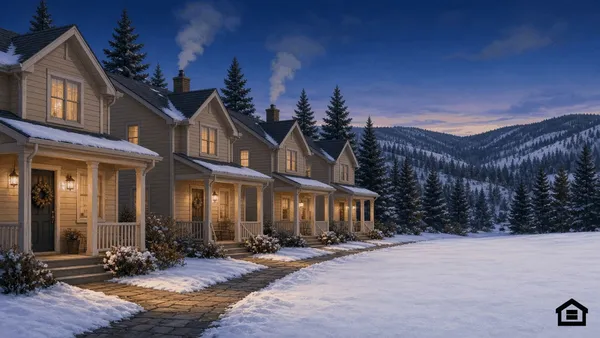
Keeping the Heat On Between Tenants: How We Manage a Winter Turnover
 By Chris Twiggs, President & Broker, Blair Allen Property Management
Broker, Blair Allen Luxury Real Estate

The riskiest week in a rental's winter usually isn't the coldest one. It's the week nobody lives there. When a home turns over between tenants in November or December, the furnace, the pipes, and the front walk all depend on someone remembering to check them.
A furnace that quits with a family inside gets reported in minutes. The same furnace quitting in an empty house can go unnoticed until the water lines freeze, split, and thaw across a finished basement. Snow piles up on a walk nobody is shoveling. The utility account ends on the old tenant's last day, and nobody started a new one.
None of that is bad luck. It's a gap in the process. Here's how we manage a winter turnover so the house stays warm, dry, and safe from the day one tenant leaves to the day the next one moves in.
Why a Winter Turnover Is Different
In summer, a vacant rental is mostly a marketing problem. You want it rented fast because every empty day costs rent. That's still true in winter, and we've written about the true cost of a vacant rental before.
Winter adds a second problem: the empty house itself is at risk. In the Black Hills and in Billings, a hard cold snap can arrive in a matter of hours. An occupied home has a built-in alarm system, the people living in it. A vacant home has only whatever system the manager puts in place.
So a winter turnover has two jobs running at the same time. Protect the property, and get it rented. If you only do the second one, you can end up with a great new tenant moving into a home with a water-damaged ceiling.
The Utility Handoff Comes First
Most leases put heat and electricity in the tenant's name, and tell the tenant to stop service on their move-out date. That's exactly what responsible tenants do. And it's exactly how a vacant house ends up with no heat.
The fix is simple, but it has to happen every time:
Know the move-out date early. We want the date in writing as soon as notice is given, not on the last day.
Start the owner's service the same day the tenant's ends. Gas and electric should transfer into the owner's name, or the manager's on the owner's behalf, so there's no gap. Water and sewer follow whatever the local utility requires.
Never let the gas shut off. If service is disconnected in an empty house during a freeze, getting it restored can take time, and a technician may need to relight appliances. A day or two without heat in January is plenty of time for pipes to freeze.
Tell the new tenant what to set up before move-in. The best handoff is a short, written list for the incoming tenant with the move-in date and the utilities they need to start in their own name.
Keep the Heat On, Even in an Empty House
Some owners want to turn the thermostat way down in a vacant unit to save on the gas bill. We understand the instinct. But the savings are small compared with what a frozen pipe can cost.
The American Red Cross recommends leaving the heat on, set no lower than 55°F, when a home will be empty during cold weather, and opening kitchen and bathroom cabinet doors so warmer air can reach the plumbing. That's a good floor. Homes with plumbing on exterior walls, older crawl spaces, or a history of cold rooms may need it set higher.
A few more steps we take in a vacant unit:
Open the cabinets under sinks on exterior walls and leave interior doors open so heat moves through the whole house.
Disconnect hoses and close interior shutoffs to outside faucets if the property has them.
Check that the furnace filter is clean so the system isn't straining while nobody is listening to it.
Use a remote temperature alert when the property has one. A smart thermostat or a simple temperature sensor can send an alert when the house drops below a safe level. It's not a replacement for a walk-through, but it can catch a failure between visits.
If a home is going to sit empty for an extended period, draining and winterizing the plumbing may make more sense than heating it. That's a judgment call based on the property, and it's one we'd make with the owner, not by default.
Someone Has to Walk Through It
Technology helps. It doesn't replace someone opening the door.
During a winter vacancy, we want eyes on the property on a regular schedule, and after every serious cold snap or storm. A good walk-through takes minutes: Is the house warm? Any water on the floor, stains on the ceiling, or sounds from the furnace? Are the doors and windows still locked? Is there a stack of flyers on the porch that tells everyone the house is empty?
That same visit catches the small things that slow down the next move-in: a burned-out porch light, a sticking lock, a drip under the kitchen sink.
Snow and Ice Don't Take a Vacancy Off
When a tenant moves out, the sidewalk doesn't stop being somebody's responsibility. In Rapid City, RCMC 12.12.090 puts the duty to keep the sidewalk free from snow and ice on the "owner or person in possession or in charge" of the property. Once the tenant is gone, that's the owner.
We covered the details in Who Shovels the Sidewalk?. For a winter vacancy, the practical point is this: line up snow removal for the empty period before the first storm, not after the first complaint. A cleared walk also matters for showings. Nobody wants to tour a house they had to wade to.
Read the Vacancy Language in Your Insurance Policy
This one surprises owners. Many property insurance policies treat a vacant home differently from an occupied one, and some limit or exclude certain types of coverage once a property has been vacant for a set period of time.
A normal turnover of a few weeks may never come close to those limits. A slow winter, a long make-ready, or a sale that falls through can. Read the vacancy section of your policy, and if anything is unclear, call your agent before the house is empty, not after something goes wrong.
The Move-Out Clock Still Runs
While the house is being protected, the paperwork from the last tenancy is still moving.
Get a forwarding address. In South Dakota, SDCL 43-32-24 gives the landlord 21 days after the tenancy ends and the tenant's mailing address or delivery instructions are received to return the deposit or give a written statement of the reasons for withholding any of it. If the tenant asks, an itemized accounting is due within 45 days. Montana's timelines are different; MCA 70-25-202 sets 30 days when there are deductions and 10 days when there aren't.
Do the move-out inspection right away. Photos and notes taken the day the tenant leaves are what make deposit decisions fair and defensible. They also become the starting point for the make-ready list.
Nothing here is legal advice. State and local rules vary, and they change.
Showing a Rental on Short Days
Daylight saving time ended on November 1, so by early November it's dark before most people get off work. That changes how a vacant rental shows.
Leave the lights on a timer so the house looks cared for in the evening, and so prospects walking up after work aren't using their phone flashlight.
Check the porch and entry lights first. They're the first thing a prospect sees and the first thing that makes a home feel unsafe when they're out.
Keep it warm. A prospect who tours a cold, dark house remembers it as cold and dark.
If the current tenant is still living there when showings start, respect their notice rights. In South Dakota, SDCL 43-32-32 presumes 24 hours' written notice is reasonable unless the lease sets a different method, and the notice has to give the date, a time window during normal business hours, and the purpose. Montana's MCA 70-24-312 requires at least 24 hours' notice outside an emergency.
Make-Ready Moves Faster When It's Planned
The fastest winter turnovers start before the tenant leaves. When notice comes in, we start lining up the pieces: the move-out inspection date, cleaning, any repairs we already know about, photos, and the listing. The goal is a home that's ready to show, and ready to live in, as soon as possible after the keys come back.
Winter is also a good time to be honest about price. Fewer people move in November and December than in June. A home priced for the summer market can sit empty through the coldest weeks of the year, and every one of those weeks carries both lost rent and the risks above.
Why This Matters
A winter vacancy isn't just a few weeks without rent. It's a few weeks where the most expensive problems a rental can have, frozen pipes, water damage, slip-and-fall risk, and a break-in, are more likely and less likely to be noticed.
A good winter turnover closes those gaps on purpose: utilities that never lapse, heat that never drops too low, regular walk-throughs, a cleared walk, a fast make-ready, and a price that fits the season.
Is your rental ready for a turnover in the middle of winter?
We'll walk you through how we protect a vacant home and how quickly we can get it rented. Want to know what your rental should actually be earning this winter? Get a free rental analysis. Let's talk. Blair Allen Property Management serves owners across South Dakota and Montana.